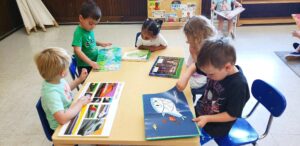
Have you ever noticed how quickly a child remembers a bright picture, a colourful object, or even a cartoon character compared to plain spoken instructions? This is not a coincidence; it is how young minds are naturally designed to learn. In the early years of development, children rely heavily on sight and visual cues to understand the world around them.
This is why visual learning in early childhood education plays such a powerful role in shaping how children absorb information. When concepts like letters, shapes, and colours are introduced through images and real-life associations, learning becomes more meaningful and long-lasting.
Today, tools like preschool learning books, interactive activities, and colourful illustrations are not just helpful; they are essential in building strong foundations for future learning.
Why Visual Learning Matters in Early Childhood Education
During the preschool stage, children are still developing language and comprehension skills. At this stage, relying only on verbal teaching is not enough. Instead, visuals help bridge the gap between understanding and memory.
In early childhood education, visual learning supports brain development by allowing children to connect images with meaning. For example, when a child sees an apple next to the letter “A,” they are more likely to remember both the object and the alphabet sound.
This method strengthens recognition skills and makes it easier for children to learn the alphabet naturally and enjoyably.
How Visual Learning Helps Children Learn the Alphabet Faster
One of the biggest challenges for parents and educators is helping children recognize letters consistently. Traditional methods can sometimes feel repetitive or boring for toddlers.
However, when alphabet learning activities include pictures, stories, and objects, the learning process becomes interactive and engaging.
For example:
- A for Apple (bright red image)
- B for Ball (colourful toy representation)
- C for Cat (familiar animal illustration)
These visual associations help children quickly connect letters with meaning. This approach also supports beginning reading skills, as children start recognizing patterns rather than memorizing symbols. A well-designed children’s learning book often uses this exact method to strengthen early literacy development.
The Role of Colours in Strengthening Memory and Recognition
Colours are one of the first things children notice in their environment. Before they even learn to read, they respond to visual contrasts and bright tones.
Teaching kids to learn colours alongside alphabet learning significantly improves memory retention. When children associate colours with objects, they begin to understand categorization and differences more clearly.
For example:
- Red Apple
- Blue Ball
- Yellow Sun
This combination supports colour recognition for children, making learning more structured and enjoyable. Many educational books for toddlers use vibrant illustrations not just for decoration, but as a powerful educational tool that strengthens attention and focus.
Interactive Learning: Turning Visuals into Experiences
Children learn best when they are actively involved in the process. That is why interactive learning for kids has become a key part of modern education.
Instead of simply showing images, parents and teachers can encourage participation through fun activities like:
- Matching letters with objects
- Colouring alphabet pages
- Identifying colours in daily surroundings
- Using flashcards with pictures
These fun learning activities help children connect learning with play, making education feel less like a task and more like an enjoyable experience.
This method also enhances literacy development, as children begin to understand language through repeated visual exposure and interaction.
Learning Through Play and Everyday Experiences
Children do not separate learning from play; they experience both at the same time. This is why learning through play is considered one of the most effective teaching approaches in early education.
Simple daily routines can become powerful learning moments. For example:
- Identifying colours while getting dressed
- Naming objects during meals
- Pointing out letters on packaging or books
These activities reinforce kindergarten readiness by helping children build confidence in recognizing letters and colours in real-life situations. A carefully designed alphabet and colours book supports this learning style by bringing familiar objects into a structured learning format.
Educational Books as a Foundation for Early Development
A strong foundation in early childhood education often begins with the right learning materials. A well-structured preschool learning book or educational picture book introduces children to essential concepts simply and engagingly.
These books are not just about reading; they are about exploration. They help children:
- Build vocabulary
- Improve attention span
- Strengthen memory
- Develop early comprehension skills
For toddlers, an educational book collection becomes a gateway to discovering the world in a safe and guided way.
Such books also support toddler educational resources that parents and educators rely on for structured learning.
Preparing Children for Kindergarten Success
One of the main goals of early education is kindergarten readiness. This involves ensuring that children are comfortable with basic learning concepts before entering formal schooling.
Visual learning plays a major role here. When children can confidently recognize letters, identify colours, and understand simple patterns, they feel more prepared and less overwhelmed in a classroom environment. This preparation builds confidence and creates a smooth transition into structured education systems.
Conclusion
Visual learning is not just a teaching method; it is the foundation of how children understand the world. By integrating images, colours, and interactive experiences, we can help children learn the alphabet, improve memory, and build essential early literacy skills.
Whether through a preschool learning book, classroom activity, or simple home practice, visual engagement strengthens every stage of early childhood education.
If you are a parent or educator, now is the perfect time to introduce structured visual learning into your child’s routine. The earlier the foundation is built, the stronger the future learning journey becomes. For a more guided experience, explore resources like Learn Alphabets and Colours With Me by Nishita Patel, a thoughtfully designed approach to make learning engaging, visual, and meaningful for young learners.