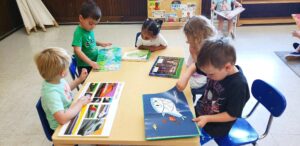
A child’s first steps into preschool are not just about carrying a school bag or learning routines; they are about becoming comfortable with learning itself. When a child starts recognizing letters, pointing at bright colours, and connecting objects with words, it builds a quiet confidence that stays with them for life.
This early stage of Early childhood education is very important because children are not learning through pressure. They are learning through what they see every day. That is why simple, playful exposure matters more than formal teaching at this age.
Helping children learn the alphabet and learn colours for kids activities in daily life makes a big difference. It is not about how fast they learn, but how familiar they become with shapes, letters, and colours around them.
Building Strong Foundations in Early Childhood Education
In their early years, children absorb everything naturally. This stage of Early childhood education is where basic thinking, memory, and attention begin to develop.
When a child looks at a Preschool learning book, they are not just seeing pictures; they are slowly building connections between images and meaning. These small moments help shape early understanding.
Books made as Educational books for toddlers use simple pictures, bright colours, and easy words. This helps children learn without feeling stressed or forced. Over time, this supports stronger Literacy development, as children start recognizing letters and understanding basic words more easily.
How Alphabet and Colour Recognition Support Preschool Readiness
Before preschool, children slowly develop skills like following instructions, noticing patterns, and recognizing familiar things. This is part of Kindergarten readiness, and it grows through everyday interaction.
For example, when a child learns “A for Apple” or “B for Ball,” they are doing Alphabet learning activities without even realizing it. Similarly, when they point out a red apple or a blue sky, they are building Colour recognition for children.
These simple experiences help children remember things better and feel more comfortable when they enter a classroom environment.
The Power of Visual Learning in Preschool Development
Children naturally learn better with visuals. Bright colours, shapes, and images help them understand faster than long explanations. That is why Visual learning for preschoolers works so well.
A Children’s learning book that mixes letters with colourful pictures helps children remember things. For example, if they see a frog with the letter “F,” they quickly connect both. This kind of learning builds memory and helps children recognize letters and objects more easily in daily life.
Interactive Learning Makes Education More Meaningful
At this stage, children learn best when they are involved, not just listening. That is where Interactive learning for kids becomes important.
Parents can easily create Fun learning activities at home, such as:
- Asking children to name colours around them
- Pointing at letters on toys or books
- Singing alphabet songs together
These small moments feel like play, but they actually build strong learning habits. An Alphabet and a colour book can also support this by giving structure to playful learning. When learning feels like fun, children naturally stay more curious and engaged.
Learning Through Play and Daily Experiences
Children don’t separate learning from play; they learn through play. That is why learning through play is one of the most natural ways to prepare them for preschool.
Daily activities like shopping, colouring, or walking outside can become learning moments. Saying things like “find the red apple” or “show me the letter B” helps children connect words with real life.
This also supports Toddler educational resources, making learning feel normal and easy instead of something separate or difficult.
Why Preschool Learning Books Matter
A Preschool learning book is more than just a book with pictures. It helps children build curiosity and get used to simple learning patterns. When combined with Educational picture books, children start recognizing words, improving their imagination, and building early vocabulary.
They begin to connect what they see with what they learn. These books also help parents guide learning simply without needing formal teaching methods.
Conclusion
Preparing a child for preschool is not about pushing academics early. It is about making learning familiar, simple, and enjoyable. When children take part in simple, everyday learning activities, they gradually build confidence and become more aware of the world around them.
A strong base in Early childhood education, along with visual and playful learning, helps children feel confident when they enter a classroom. Tools like a Preschool learning book and a Children’s learning book make this process easier by mixing learning with fun and visuals.
A helpful option for parents is Learn Alphabets and Colours with Me by Nishita Patel, which brings letters and colours together in a simple, child-friendly way that supports early learning without pressure.